
105cats
IID · 2019
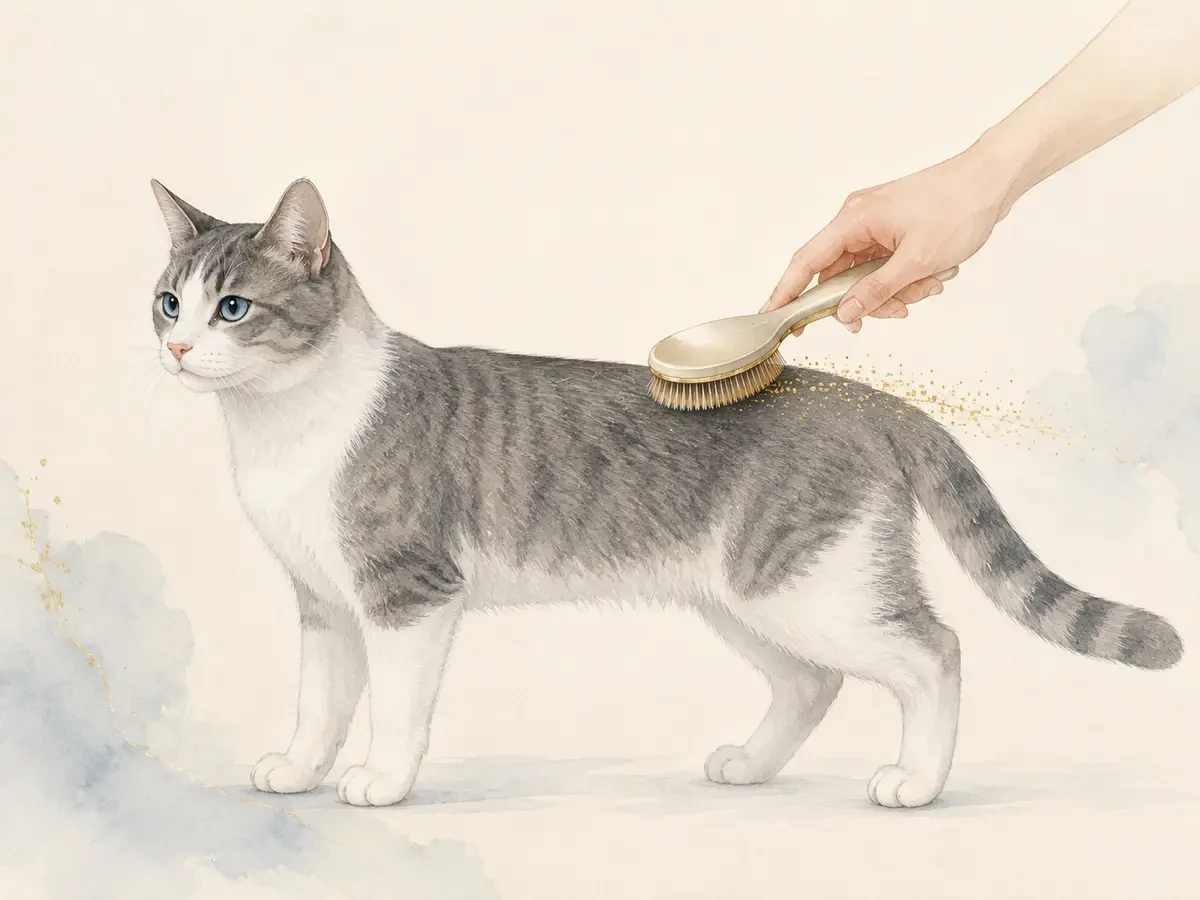
Activate Fel d 1 on the coat
Significant reduction from week 3; an average decrease of approximately 47% later in the study
Read original paper ↗OKCLEAR SCIENCE
Discover how OKCLEAR manages cat allergens using egg-yolk IgY to target Fel d 1, along with its broader research on Fel d 2–8.

ON THIS PAGE
Fel d 1–8 outlines the R&D direction and does not demonstrate full-target efficacy. Results reported in published papers for other products do not apply to this product.
FEL D 1
Fel d 1 is found in cat saliva and skin secretions. Grooming transfers it to the fur, where dander and dust then spread it throughout the home. Hair itself is typically not the allergen—it acts as a carrier.
| Fel d 1 | Secretoglobin | Associated with salivary and sebaceous glands; a core component in feline allergy research |
|---|---|---|
| Fel d 2 | Serum albumin | Exhibits cross-species cross-reactivity significance; a key complement to component-based diagnostics. |
| Fel d 3 | Cystatin | An additional component in the cat allergen profile that accounts for individual sensitization variations. |
| Fel d 4 | Lipocalin | Primarily associated with saliva; may contribute to component sensitization in some individuals. |
| Fel d 5 | Immunoglobulin-related | Expands cat allergen identification beyond a single Fel d 1 pathway |
| Fel d 6 | Immunoglobulin-related | Used to build a comprehensive multi-component research and testing framework |
| Fel d 7 | Lipocalin | Related to a component of the respiratory sensitization profile; a key focus of the broad-spectrum strategy. |
| Fel d 8 | Latherin-like protein | Achieves multi-target coverage of the Fel d allergen family |
IGY
IgY is an egg-yolk antibody. Published laboratory studies show that anti-Fel d 1 IgY binds to the protein and reduces measured active Fel d 1. This source-side approach prevents allergens from entering the environment.
FEL D 1–8 FRAMEWORK
Fel d 1 is one of the best-studied components, but cat allergy isn't determined by a single component alone. Fel d 2, 4, and 7 also contribute to different molecular sensitization profiles. A multi-target approach doesn't mean every home must address eight components at once; it means R&D shouldn't reduce real-world exposure to just one marker.
Patent Position
Core formulations and preparation processes related to Fel d1–8 are the subject of patent filings, covering broad-spectrum IgY antibody production, product formulations, and application methods. Status reflects verifiable filing or grant information; an application is not a granted patent.
SOURCE → COAT → HOME
Three stages correspond to three product touchpoints: daily nutrition at the source, grooming and cleaning on the coat, and spray and litter care in shared living spaces.

01
Management starts at the source of saliva-associated allergens via daily feeding.
02
After grooming, microscopic particles can spread through the coat and dander.

03
Bedding, sofas, clothing, and litter areas are the most frequently contacted spots in the home.
PUBLISHED RESEARCH
105cats
IID · 2019
Significant reduction from week 3; an average decrease of approximately 47% later in the study
Read original paper ↗26weeks
Frontiers · 2020
No ingredient-related adverse effects observed under test conditions
Read original paper ↗84days
Frontiers · 2024
27 kittens in a randomized, blinded controlled study; no biologically meaningful adverse changes
Read original paper ↗42people
MASK-air · 2024
After one month, overall, nasal, ocular, and symptom–medication scores all improved.
Read original paper ↗GLOBAL PARTNERSHIPS
We seek partners who can transform technical evidence into compliant market education, channel execution, and ongoing customer support. Scope is assessed on a project-by-project basis.